By Julie Asher
OSV News
WASHINGTON — While continuing to work to change laws to protect the unborn and support pregnant women in need, “we need to redouble our efforts to continue building, in the words of St. John Paul II, ‘a culture of life and a civilization of love,'” Bishop James D. Conley of Lincoln, Nebraska, said Jan. 22.
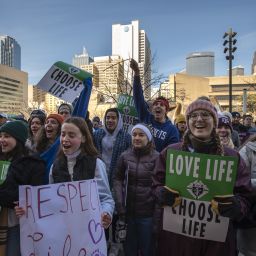
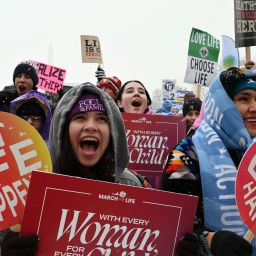
“We need to continue to pray and work to change hearts,” he said in his homily at the opening Mass of the annual National Prayer Vigil for Life Jan. 22-23, preceding the March for Life, which takes place Jan. 23 this year.
Jan. 22 is also observed by Catholics in the U.S. as the Day of Prayer for the Legal Protection of Unborn Children. The date recalls the U.S. Supreme Court’s Jan. 22, 1973, decisions in Roe v. Wade and Doe v. Bolton, which legalized abortion nationwide as a constitutional right until the 2022 Dobbs v. Jackson Women’s Health Organization decision.
“As it has often been said that in the end, ‘The measure of a society is how well it treats its weakest members,'” Bishop Conley said. “Only God can change hearts, but we know that God listens and answers the prayers of his people.”
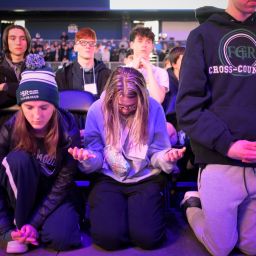
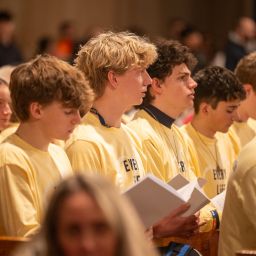
The bishop had a special message for the hundreds of young people — from grade school to high school to college — in the congregation of about 6,500, who filled to overflowing the Upper Church of the Basilica of the National Shrine of the Immaculate Conception in Washington.
“My dear young people, you are the pro-life generation,” he said. “I have said to young people in my diocese, young people of your generation, that I firmly believe that 50 years from now, when my generation will have gone to God, your grandchildren will ask you, ‘Is it true that when you were my age, they put children to death in the womb?'”
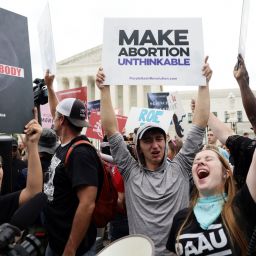
“Our goal is not only to make abortion illegal. Our goal is to make abortion unthinkable!” he said.
Bishop Conley, the principal celebrant, thanked Bishop Daniel E. Thomas of Toledo, Ohio, chairman of the U.S. Conference of Catholic Bishops’ Committee on Pro-Life Activities, for inviting him to say the Mass. The concelebrants included three cardinals, 21 bishops, and 133 priests. Thirty-three deacons and 260 seminarians also attended.
The three cardinals were Cardinal Robert E. McElroy of Washington; Cardinal Christophe Pierre, apostolic nuncio to the United States; and Cardinal Seán P. O’Malley, retired archbishop of Boston, who was the celebrant and homilist of the vigil’s closing Mass the following morning.
In his words of welcome, Cardinal McElroy thanked the thousands of pilgrims, “especially the young people,” who traveled “far and wide,” to come to pray and witness to the dignity of human life from conception to natural death.
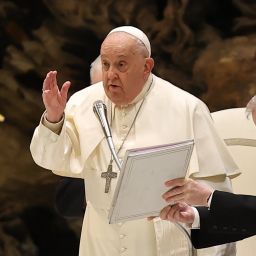
Cardinal Pierre read a message from Pope Leo XIV to this year’s March for Life participants. The pope expressed his “heartfelt appreciation” to march participants and his deep gratitude for their “eloquent public witness.”
Quoting his Jan. 9 address to Holy See-accredited diplomats, the pope assured the marchers “of my spiritual closeness as you gather for this eloquent public witness to affirm that ‘the protection of the right to life constitutes the indispensable foundation of every other human right.'”
In his homily, Bishop Conley referenced that papal address to the diplomats, “confirming the importance of abortion as the preeminent priority” and emphasizing that the right to life “the condition for all other human rights.”
“The U.S. bishops also teach that abortion is the preeminent issue of our day for several reasons,” the bishop said, including the fact that it is “a direct and intentional destruction of human life at its most fundamental level.”
“The sheer number of lives lost through abortion, more than a million each year, is catastrophic,” he added. “Imagine if there were over a million murders each year through gun violence? Would we tolerate that?”
Bishop Conley said that the bishops also teach there are other very “grave threats to the life and dignity of the human person, including euthanasia, gun violence, terrorism, the death penalty, and human trafficking.”
“There is also the redefinition of marriage and gender, threats to religious freedom at home and abroad, lack of justice for the poor, the suffering of migrants and refugees, wars and famines around the world, racism, the need for greater access to healthcare and education, care for our common home, and more,” he said, quoting the introductory note of the U.S. bishops’ document “Forming Consciences for Catholic Citizenship.”
“But our brothers and sisters in the womb are the most vulnerable and voiceless victims,” Bishop Conley emphasized. “In most other cases of injustice, those who are threatened can speak out for themselves and have at least some powers to defend themselves, some form of advocacy.”
He hailed the fact that the Supreme Court, in its 2022 Dobbs decision, overturned Roe and returned the issue of abortion to the states. He praised voters in his own state of Nebraska for passing a ballot initiative on Nov. 5, 2024, to amend the state constitution to ban elective abortions in the second and third trimesters, extending legal protection to the approximately one in 10 babies that are aborted annually in these later stages of pregnancy.
But he lamented the fact that “there are still over a million abortions each year in our country — mostly through chemical and non-surgical means.”
Bishop Conley said that “no matter what happens politically, we — as Catholics — must always be here to lovingly serve women and to help them welcome new life.” He said one way the Church does that is through the Walking with Moms in Need initiative, through which participating Catholic parishes around the country provide services, support “and accompaniment to vulnerable pregnant and parenting mothers.”
The Church also “does not abandon those who have chosen abortion,” he said. “As pastors, we witness firsthand the wounds women and men endure after ending the life of their child,” he said and pointed to Project Rachel Ministry and its post-abortion outreach.
Bishop Conley said that he has been coming to “this Vigil Mass and to the March for Life, off and on, ever since my days in the seminary, just up the road at Mount St. Mary’s Seminary in Emmitsburg, Maryland.”
“Each year it’s like a shot in the arm to be with so many of you,” he continued, “particularly you young people, who share a passion and joy for the gift of life and who want to build a ‘culture of life and civilization of love,’ where babies are protected in their mother’s womb, and women are, loved and cared for when they find themselves faced with very difficult and life-changing decisions.”
The closing Mass at the basilica early Jan. 23 served as a send-off for those heading across town to the March for Life. In his homily, Cardinal O’Malley, the principal celebrant, called it “a joy and a privilege to gather on this new day to give thanks for life and to March for Life.”
“This is a pilgrimage for life and it begins with prayer here in Mary’s shrine,” said the cardinal, who, with the exception of the COVID limitations in 2021, has been to every March for Life since the first one in 1974.
“We’re here today to proclaim life is a gift. It’s a precious gift from a loving God,” he continued. “Together we can protect and nurture that gift of life; we must look for opportunities to be apostles of life building a civilization of love and ethic of care.”
He said that “if we aspire to overcome abortion in our world, we must commit ourselves to helping mothers, especially those with a difficult pregnancy and challenging circumstances,” with programs such as Walking with Moms in Need initiative and Project Rachel, echoing Bishop Conley in his opening Mass homily.
Jesus Christ came into the world “as a baby so that we might have life and have it abundantly,” Cardinal O’Malley said. “Life abundant is life sustained by grace. The antidote to abortion is love, love manifest in community, compassion, and solidarity.
“Life is a gift. Every person is a gift. Every person counts. All are important. Your mission is to work so that no child will be left behind, every baby will be welcomed, loved, cared for, nurtured, and protected. Thank God for the gift of life; thank God for love; thank God for you.”
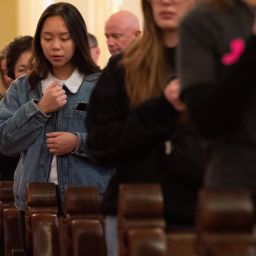
Cutline for featured image: Worshippers attend the National Prayer Vigil for Life Mass at the Basilica of the National Shrine of the Immaculate Conception in Washington Jan. 22, the evening before the annual March for Life. (OSV News photo/Mihoko Owada)