By Father Alex Fry
Special to The Texas Catholic
There is a cemetery in the town where I grew up, and whenever I return, I like to walk around it. I always stop at two places. The first is the family plot where my grandparents, great-grandparents, and great-great-grandparents are buried. It is also where my parents will eventually be buried. (Sorry, Mom and Dad!) The second is the priest circle, where some of the priests who helped found the local parish are buried. I pray for them all, hoping that these two groups are like my heavenly teammates, praying for me and encouraging me in my own walk on earth.
On All Souls Day, we pray for those who died in God’s friendship but still need purification before entering heaven. We call this purgatory. But what is it, and why do we pray for the dead?
Scripture tells us that nothing unclean can enter heaven (Rv 21:27), yet it speaks of those who are saved undergoing purification. St. Paul described a refining fire in 1 Corinthians 3, while St. Peter said our faith is tested “as gold in the fire” (1 Pt 1:7). Purgatory is this final purification by God’s love, preparing us to enter heaven with nothing remaining in us unworthy of his presence.
Imagine being invited to a royal banquet after a long day. You arrive sweaty, dusty, and wearing your everyday clothes. You belong there; the king wants you there; but you need to be cleaned up before entering the banquet hall. Purgatory is like that final preparation. It is not about earning heaven but being made ready for it.
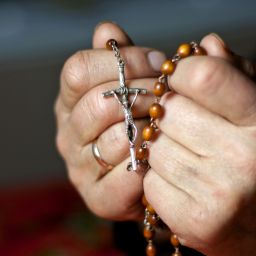
Why, then, do we pray for the dead? First, Scripture attests to this practice. 2 Maccabees 12:45 describes prayers and offerings for the dead so that they might be delivered from their sins. Jesus also entrusted his Church with spiritual authority to bind and loose (Mt 16:19). From the earliest centuries, Christians have offered prayers and Masses for the departed. Love does not stop at the grave. The Church Militant on earth intercede for the Church Suffering in purgatory, that they may enter the joy of the Church Triumphant in heaven.
Of all our prayers for the dead, none is more powerful than the sacrifice of the Mass. Listen carefully to the eucharistic prayer, and you will hear us explicitly remember the faithful departed.
The Church also commends almsgiving, penance, and indulgences on behalf of the dead. Each year, Nov. 1-8, a plenary indulgence may be gained for a soul in purgatory by visiting a cemetery and praying for the dead.
Indulgences can be confusing, especially given historical abuses. In the Middle Ages, some churchmen treated them as fundraising tools, as though grace could be bought with money. This was a grave abuse, not the Church’s teaching.
An indulgence is the application of Christ’s mercy to the temporal effects of sin. It does not forgive sin; that requires repentance and, for mortal sins, the sacrament of confession. Rather, an indulgence assists the purification that remains even after sin has been forgiven. Our prayers, sacrifices, and acts of love truly matter, and God uses them to communicate his grace.
To gain a plenary indulgence, the usual requirements include confession, holy Communion, prayer for the pope’s intentions, and complete detachment from sin, even venial sin. If these conditions are not all met, a partial indulgence may still be gained.
Death is easy to ignore until it touches someone we love. Suddenly, “someday” becomes today, and our schedules, projects, and stresses seem far less important. Death forces us to confront what we believe: Who is Jesus? What is eternal life? What truly matters? We must prepare for death, because when we lose someone we love, grief can make it feel as though the whole world is falling apart.
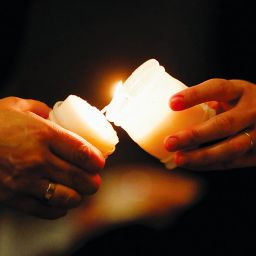
One reason the early Church was so compelling, besides God’s grace, was its care for widows, orphans, and the grieving. Christians surrounded those who suffered with love. We have that same responsibility today.
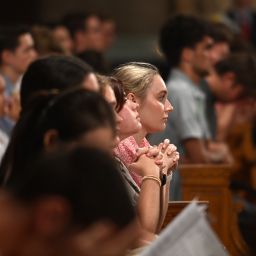
This is why Sunday Mass matters so much: not only because we worship God but because we build a real family of faith. Introduce yourself to people you do not know. Learn their names. Invite another family to dinner. Share life together. When suffering comes, we need those relationships already in place so that we can carry one another’s burdens.
As we pray for the souls in purgatory, we commend them to God’s abundant mercy, trusting him to complete the good work he has begun in those he loves. Let us also pray for ourselves: that we become a community that remembers the dead, consoles the grieving, and ensures that no one has to face death and loss alone.
Father Alex Fry is a parochial vicar at St. Francis of Assisi Catholic Parish in Frisco.
Cutline for featured image: Students of James L. Collins Catholic School pose in their saint costumes with Father Juan Carlos Marín, pastor of Immaculate Conception Catholic Parish in Corsicana, on Oct. 30 in celebration of All Saints Day. (Photo courtesy of James L. Collins Catholic School)