By Constanza Morales
Special to The Texas Catholic
Samantha Lopez, a fourth- and fifth-grade science and math teacher at Santa Clara of Assisi Catholic Academy in Dallas, saw her dream of providing personalized support to each of her students become a reality this school year.
Thanks to a data tracking system implemented by the school, Lopez has created progress maps for each of her fourth- and fifth-grade students. The approach, known as data-driven instruction, involves teachers regularly collecting, analyzing, and using student data to guide classroom decisions. Lopez views the data not as something cold or impersonal but as a set of tools that helps her understand how to support each child’s learning more effectively.
Santa Clara of Assisi Catholic Academy began using data-driven instruction at the start of the 2025-26 school year. The school serves about 200 students from prekindergarten through eighth grade and is the only campus in the Diocese of Dallas offering a dual‑language program in English and Spanish.
One child, one strategy
For Lopez, who graduated from Santa Clara of Assisi in 2016, teaching each student from an individual perspective means being able to step in at the moment each child needs support the most.
“We must differentiate students, because their learning growth is not all the same,” she explained. “We want to make sure every student feels supported and seen at our school. We are able to tier them and provide small group intervention because of our data tracking.”
With the data, Lopez classifies her students based on their performance and assessments.
“This allows us to identify learning gaps and encourages collaboration between students and teachers,” she said.
Technology is one of the key tools supporting data‑driven instruction at Santa Clara of Assisi.
“We have implemented the use of data this year, such as a campuswide data tracker, and are following MAP Growth progress to provide specific interventions for students,” Principal Jennifer Fernando said.
MAP Growth is a computerized assessment that tracks growth in subjects such as math and reading. By assessing students’ strengths and weaknesses each fall, winter, and spring, teachers can tailor instruction and address specific skill gaps for every student.
“Before using data-driven instruction, I personally had a harder time differentiating amongst students and setting personal goals for them,” Lopez said. “I wasn’t able to see data evidence to understand what gaps students had.”
Now, with the evidence in hand, Lopez sits down with each student to let them know how much progress they have made.
“They absolutely love seeing their data graph and how they improve,” Lopez said. “It’s such a great motivator within itself for the students.”
Continuing to expand the use of data‑driven instruction remains a key priority for Santa Clara of Assisi.
“The main challenge is translating the data into action,” Lopez said, noting that the school has hired a math tutor to help identify the most effective interventions to address students’ deficiencies in that subject. “There is no doubt in my mind that beneficial changes with data are happening at Santa Clara that involve putting our students’ educational success first.”
Editor’s note: A version of this story appeared in the February 2026 edition of Revista Católica Dallas, the official Spanish-language publication of the Diocese of Dallas.
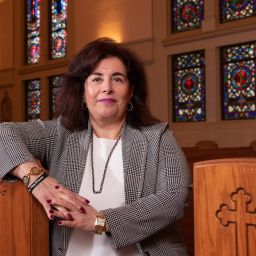
Cutline for featured image: Santa Clara of Assisi Catholic Academy teacher Samantha Lopez uses data‑driven instruction to tailor academic goals to each student’s individual performance. (Santa Clara of Assisi Catholic Academy photo)