By Father Thomas Esposito, O. Cist.
Special to The Texas Catholic
Gabriel is not the first messenger of the LORD to greet someone with the phrase “The LORD is with you” (Lk 1:28). An anonymous angel hails Gideon, a young man from a poor and insignificant family, as the lad desperately hides his family’s wheat harvest from the marauding Midianites: “The LORD is with you, you mighty warrior!” (Jgs 6:12). Gideon then receives his commission to save Israel from the hand of its enemy and to be a judge over the 12 tribes. “The LORD is with you” appears on the lips of prophets as well: Nathan, who encourages David to build a house for the LORD before receiving word that the LORD will be the one to build a house for David (2 Sm 7:3); and Azariah, who ominously exhorts king Asa to purify the land of idols: “The LORD is with you when you are with him, and if you seek him, he will be found; but if you abandon him, He will abandon you” (2 Chr 15:2).
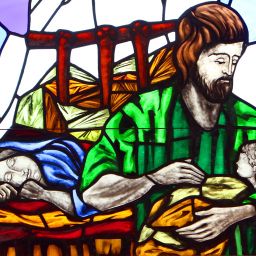
But the greatest prophecy foretells that the LORD will not be content to assist those faithful to his word; he himself will come to dwell in their midst. Matthew explicitly cites Isaiah 7:14 in his presentation of the annunciation to Joseph: “All this took place to fulfill what the LORD had said through the prophet: ‘Behold, the virgin shall be with child and bear a son, and they shall name him Immanuel,’ which means ‘God is with us’” (Mt 1:22-23). The Gospel of Matthew has Immanuel bookends; in the very last verse, Jesus subtly alludes to Isaiah 7:14 as he promises to accompany the disciples on their missionary adventures: “And behold, I am with you always, until the end of the age” (Mt 28:20).
Luke does not emphasize the Isaiah 7:14 prophecy to the same extent as Matthew, but he does highlight a complementary way of expressing God’s closeness to humanity. Gabriel’s explanation of how “the LORD is with” Mary includes an initially puzzling comment. After encouraging her not to be afraid, since she has found favor with God, the angel declares, “Behold, you will conceive in your womb and bear a son, and you shall name him Jesus” (Lk 1:31). A curious statement, this; where else does a woman conceive a child if not in her womb?
The specification of the womb as the location seems entirely unnecessary…until one considers that Mary’s womb has been prepared to be the precise dwelling place for the LORD. Indeed, this is exactly what Gabriel claims. After stating the human credentials of Jesus as a Davidic king whose reign will never end, his divine attributes are affirmed in response to the virgin’s question about how this could happen: “The Holy Spirit will come upon you, and the power of the Most High will overshadow you. Therefore, the child to be born will be called holy, the Son of God” (Lk 1:35).
Mary is the Ark of the new covenant, the sanctuary where the presence of God in the flesh will dwell for nine months. She is also the fulfillment of the virgin-mother prophecy of Isaiah 7:14, a promise that had waited more than seven centuries to be claimed. Her child receives the name Jesus, not Immanuel, but this not does discredit the prophecy. The name Jesus, “Yeshua” in Hebrew, means “the LORD saves”; it expresses precisely what the Father accomplishes through the life, death, and resurrection of the Son. And the very presence of the incarnate Son in the flesh is sufficient proof that “the LORD is with” not only Mary, but all those who confess that in Jesus, the Son of God and Son of Mary we see the LORD who teaches us how far we had fallen from God and how radically God wished to recall us to himself.
Father Thomas Esposito, O. Cist., is a monk at the Cistercian Abbey of Our Lady of Dallas and teaches in the theology department at the University of Dallas.
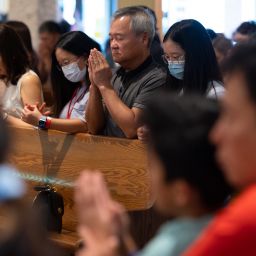
Cutline for featured image: Navajo Dawn Hale, 12, of Tohatchi, N.M., holds hands with other Tekakwitha Conference attendees July 24, 2014, as they pray the Our Father during Mass in Fargo, N.D. (CNS photo/Nancy Wiechec)